

November 12, 2026 1:30 - 3:15 PST
Environmental product declarations (EPD) are independently verified documents that are intended to transparently report the life cycle environmental impact of products. Increased adoption and literacy around EPDs in the building industry supply chain can better inform purchasing decisions and support manufacturers who deliver measurable carbon reductions and long-term value. Investment in supply-chain transparency and EPD-informed procurement is already driving measurable shifts in the building materials market. Project teams are using EPD data to select products with smaller carbon footprints, and manufacturers are reducing embodied carbon through electrification, fuel substitution, process efficiency, and lower-impact raw materials.
This seminar will show how investment into supply chains and material innovation leads to quantifiable emissions reductions, waste avoidance, and long-term value across the built environment. Rather than considering EPDs as a ‘check-the-box’ exercises, the session positions them as tools for smarter procurement and capital planning.
The session will draw from multiple perspectives. UC Berkeley’s research with the California Air Resources Board will anchor the conversation in the emerging policy and data infrastructure needed for scalable materials monitoring. LEED v5 will be presented as a market mechanism that turns insight into action. The session will also describe how bio-based materials such as straw insulation offer numerous benefits: it may be locally sourced, requires minimal processing and stores biogenic carbon.
This event is free and open to the public, and co-sponsored by PG&E and UC Berkeley’s Center for the Built Environment.
Agenda
1:30 pm Overview and introductions
1:35 pm Presentations each followed by brief Q&A (final sequence may vary)
- Matt Roberts will present research with the California Air Resources Board and anchor the conversation in emerging policy and data infrastructure needed for scalable materials monitoring.
- Steph Hallinan will provide background around sustainable supply chain management and LEED v5 as a market mechanism.
- Anthony Dente will describe benefits of creating supply chains around bio-based materials, using one or more specific examples.
2:50 pm Moderated panel discussion with all speakers
3:15 pm Conclude
Speakers and Presentations
-

Anthony Dente, LEED AP
Principal, Verdant Structural
Anthony Dente is a licensed engineer and principal at Verdant Structural Engineers (VSE) and Verdant Building Products (VBP) and is the vice president of the Cob Research Institute (CRI), where he is committed to appropriate material use for all structural building systems. VSE has designed over 300 structures using natural-building wall systems such as straw bale, adobe, rammed earth, earthbag, and cob. With CRI, he was the lead engineer for the Cob Construction Appendix in the International Residential Code, as well as the Hemp-Lime (Hempcrete) Appendix, both the first of their kind in the US. With VBP, he is project lead for their prefabricated, carbon-storing, straw wall panels which was originally developed under the EPA SBIR grant program.
-

Steph Hallinan
Associate Director, U.S. Market Transformation & Development U.S. Green Building Council
Steph found her passion for sustainability and problem solving whilst obtaining her degree in architecture. She spent eight years in supply chain management and consulting with Owens Corning HQ and onward to Lowe’s HQ. Steph led a distribution center cross-dock initiative for Lowe’s leading to $200M in cost savings. Her passion for sustainability remained throughout her supply chain tenure and she finally transitioned to dedicated non-profit work in 2023 with the U.S. Green Building Council, where she leads the region in market transformation and development.
-

Matt Roberts
Assistant Researcher, Center for the Built Environment, UC Berkeley
Matt Roberts is focused on the advancement of life cycle assessment (LCA) methodology for material to building scale applications within the built environment. His current interests include the use of consequential LCA to assess changes in environmental impacts that result from implementing impact reduction strategies at scale and the development of target values to broaden the scope of sustainability. Previous research has included the LCA of ‘active’ buildings with on-site energy storage and on-site energy generation that are capable of responding to the grid, and LCAs for bio-based building materials intended for use in circular economy applications. He received his PhD in Architecture and Civil Engineering, and a MSc in Conservation of Historic Buildings from the University of Bath, UK, where his PhD research focused on LCA and net-zero carbon building design. He completed undergraduate studies at the University of Waterloo, Canada.
-
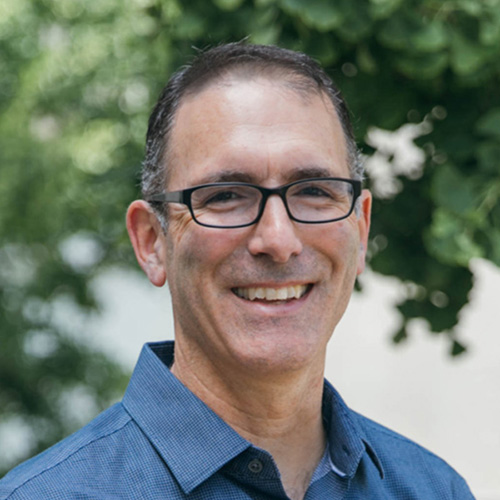
David Lehrer, LEED AP, RA [Moderator]
Center for the Built Environment, UC Berkeley
David Lehrer serves as CBE’s primary liaison between our industry partners and the research staff, he leads CBE’s outreach, public events and research portfolio planning. He has been a key contributor to several CBE research topics including occupant surveys, high-performance facades, and the visualization of building information. David is a licensed architect in California and holds a MArch degree from UC Berkeley. Prior to joining CBE, David practiced architecture for over a decade on a broad range of project types. David is a specialist in resource efficient design, and has lectured and written on numerous related topics.
Continuing Education
The objective of this course is that at the conclusion, participants will be able to:
- Demonstrate understanding of how to use EPD data to ask better questions of material suppliers and manufacturers
- Explain how supply chain decisions, not product certifications alone, drive reductions in embodied carbon.
- Compare bio-based and conventional material systems in using life cycle thinking.
- Describe how LEED v5 and other policy frameworks turn EPD data into actionable procurement standards