

July 8, 2026 2:00 - 3:45 pm PDT
With the emerging trend towards fully electrified buildings, plus the demands from a growing IT sector, utilities and building portfolio managers are facing growing peak demands while also seeking solutions towards decarbonization and grid resilience. This session features three emerging HVAC strategies, with detailed case studies that can move these ideas from research to implementation.
Carlos Duarte will present a recently published simulation study exploring how radiant cooling systems can reduce strain on the grid during peak demand hours, evaluating numerous parameters such as the scheduling of system operation to optimize for climates. With simulations of 16 climate zones in California, plus 14 additional climates, these results can inform optimization for load shifting in radiant systems.
Jiwon Park will discuss a case study of an all-electric medical office building that implemented heat recovery chillers to reduce emissions, providing a higher coefficient of performance than air-to-water heat pumps, with a smaller equipment footprint. Results show the technical feasibility of these systems, but also their complexity and variability, with a proposed new metric for assessing performance in such systems.
Finally, Tharanga Jayarathne will describe the field implementation and validation of a novel control strategy that optimizes supply air temperature resent. Recent implementations in three commercial buildings demonstrate its potential as a cost-effective and scalable control strategy, with energy or cost savings up to 20%.
This event is free and open to the public, and co-sponsored by PG&E and UC Berkeley’s Center for the Built Environment.
Agenda
2:00 pm Overview and introductions
2:10 pm Presentations each followed by brief Q&A (final sequence may vary)
- Carlos Duarte will present recently published simulation study that explores how radiant systems can reduce strain on the grid during peak demand hours.
- Jiwon Park will discuss a detailed case study of an all-electric medical office building that implemented heat recovery chillers.
- Tharanga Jayarathne will describe the field implementation and validation of a novel control strategy in three commercial buildings.
3:20 pm Moderated panel discussion with all speakers
3:45 pm Conclude
Speakers and Presentations
-
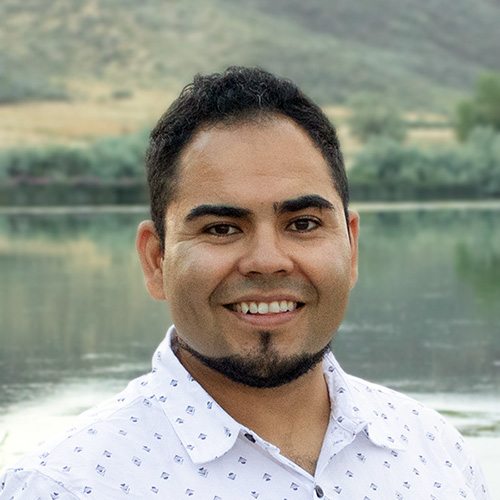
Carlos Duarte
Assistant Professional Researcher, Center for the Built Environment, UC Berkeley
Carlos Duarte’s research interests include radiant heating and cooling, occupant behavior impact on building energy consumption, and the development of tools that help various building stakeholders. He is currently working on a project aimed to standardize semantic descriptions of equipment, control points, and locations along their relationships to make it easier to extract actionable information from the wealth of data that buildings’ systems produce. He recently contributed to a project aimed to reduce natural gas consumption in commercial building heating systems. Carlos holds a PhD in Architecture from the Building Science, Technology and Sustainability Program at UC Berkeley, and BS and MS degrees in Mechanical Engineering from the University of Idaho.
-

Tharanga Jayarathne
Senior Research Engineer at TRC Companies, Inc.
Tharanga Jayarathne specializes in advanced HVAC controls, energy efficiency and building decarbonization technologies. His work focuses on developing and demonstrating intelligent control systems, operational analytics, and scalable energy optimization technologies for commercial buildings. His recent work includes the development and field demonstration of the Cost Optimized Reset (CORE) supply air temperature strategy, an advanced HVAC control method designed to reduce energy use and operating costs while maintaining occupant comfort. He is currently leading projects focused on HVAC control strategies and demand-responsive operation of commercial buildings. Tharanga holds a PhD in Mechanical Engineering from Boston University.
-

Jiwon Park
PhD student in Building Science, Technology and Sustainability, UC Berkeley
Jiwon Park is interested in building decarbonization, with a particular focus on HVAC waste heat recovery. Her recent work includes field performance evaluation of heat recovery chillers in all-electric medical buildings and condensation risk assessment in radiant cooling systems. She has also contributed to research on multi-chiller load distribution strategies, simultaneous AHU supply air temperature and condenser water reset strategies. Jiwon holds BArch and MS degrees in Architectural Planning from Korea University, Seoul, and is a recipient of the Kwanjeong Educational Fellowship.
-
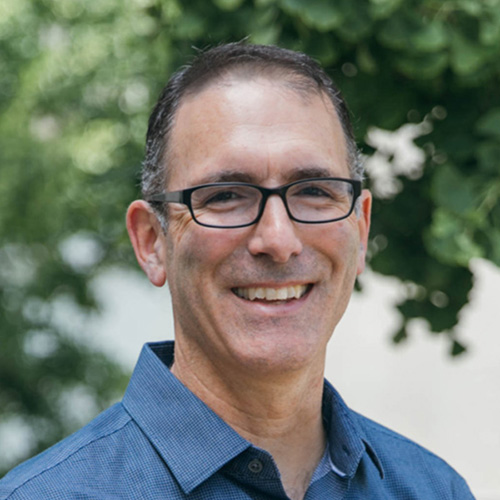
David Lehrer
[Moderator] Center for the Built Environment, UC Berkeley
David Lehrer serves as CBE’s primary liaison between our industry partners and the research staff, he leads CBE’s outreach, public events and research portfolio planning. He has been a key contributor to several CBE research topics including occupant surveys, high performance facades, and the visualization of building information. David is a licensed architect in California and holds a MArch degree from UC Berkeley and a BFA from the University of Arizona. Prior to joining CBE, David practiced architecture for over a decade on a broad range of project types. David is a specialist in resource efficient design, and has lectured and written on numerous related topics.
Continuing Education
The objective of this course is that at the conclusion, participants will be able to:
- Generally describe how radiant cooling systems can help shift building loads and reduce peak electricity demand.
- Explain benefits of using heat recovery chillers in all-electric commercial buildings.
- Identify how HVAC control strategies, such as supply air temperature reset, can reduce energy consumption and cost.
- Discuss practical approaches for implementing emerging HVAC technologies to reduce energy use, emissions and operating costs.