

February 25, 2026 9:30 am – 11:15 am PST
Carbon emissions caused by electricity use in buildings are commonly accounted for using average emissions factors. However, decisions around building energy use should be based on marginal carbon impacts, and these are highly variable based on seasonal, daily and geographic factors. For example, in regions with sufficient (or excess) daytime solar generation, electricity use during these periods will result in low carbon emissions, whereas at other times demand may be met by fossil fuel plants, leading to significantly higher carbon impacts. This webinar included researchers and industry experts who will discuss case studies, recent research and free online tools to help industry professionals and homeowners to understand how time-varying marginal emissions rates can inform system design and operational decisions to decrease carbon impacts.
The presentations featured a case study in a Chicago building where a control intervention used real-time marginal emissions data to shift the electricity consumption to times when renewable energy would otherwise be wasted due to curtailment — when renewable energy is actively reduced to balance supply and demand. Presentations also included a study that evaluated a load-shifting control strategy designed to align HVAC operation with low-carbon periods on the Northern California grid. Results demonstrated that this approach reduced emissions most effectively during spring when more renewable sources are available, while also showing the limits of load shifting as a single decarbonization strategy.
Speakers also demonstrated use cases and features of two new online tools to help users understand marginal emission impacts. One tool enables comparison of numerous options for decarbonizing commercial buildings, including during HVAC retrofits. A second tool provides household electricity customers with intuitive visualizations of marginal emissions based on Green Button electricity data.
This event was free and open to the public, and co-sponsored by PG&E and UC Berkeley’s Center for the Built Environment.
Speakers and Presentations
-

Carlos Duarte
Assistant Professional Researcher, Center for the Built Environment, UC Berkeley
Presentation: My Carbon on the Margin: Webtool to Assess the Carbon Impact of Electricity Consumption
Carlos Duarte’s research interests include radiant heating and cooling, occupant behavior impact on building energy consumption, and the development of tools that help various building stakeholders. He is currently working on a project aimed to standardize semantic descriptions of equipment, control points, and locations along their relationships to make it easier to extract actionable information from the wealth of data that buildings’ systems produce. He recently contributed to a project aimed to reduce natural gas consumption in commercial building heating systems. Carlos holds a PhD in Architecture from the BSTS program at UC Berkeley, and BS and MS degrees in Mechanical Engineering from the University of Idaho.
-

Geoff Hancock
Product Manager, WattTime
Presentation: Case Study: Grid-Interactive Buildings Can Accelerate Decarbonization
Geoff is a product manager at WattTime, a nonprofit that empowers people, companies, and policymakers with data-driven solutions to reduce emissions from electricity use. He assists IOT technology companies in developing Automated Emissions Reduction (AER) for their smart devices and equipment. His personal passion and mission are to fight climate change by transforming existing buildings and the way we operate them and to make zero-carbon buildings mainstream by teaching and collaborating with others.
-
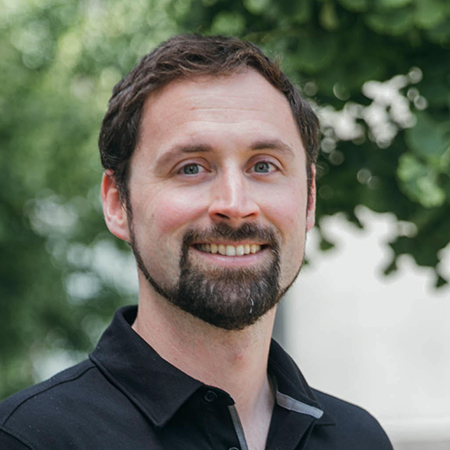
Paul Raftery
Professional Researcher, Center for the Built Environment, UC Berkeley
Presentation: Webtool To Evaluate Emissions Impacts of Heating and Cooling Loads in Large Buildings
Paul Raftery is focused on improving building energy efficiency by investigating advanced integrated HVAC systems. He holds a PhD in Engineering for developing a new method for calibrating building energy models to detailed measured data. He has over a decade of hands-on experience in HVAC engineering, building automation systems and controls, fault detection and diagnosis, full-scale laboratory experiments, new technology development, measurement and verification of technology demonstrations, machine learning and software development.
-

Aoyu Zou
PhD student in Building Science, Technology and Sustainability, UC Berkeley
Presentation: Load Shifting Effect Analysis Using Marginal Emission Rates
Aoyu Zou received his BEng degree in Civil Engineering from University of Nottingham, and his MPhil degree in Architecture and Urban Study from University of Cambridge, focusing on facade maintenance for timber structures. He also received his MS degree in System Engineering from UC Berkeley Civil & Environmental Engineering. His research focuses on the control of mechanical systems in buildings with the goal of reducing operational carbon emissions and energy consumption. He is particularly interested in exploring a scalable implementation of grid-interactive controls to aid in the decarbonization of the built environment.
Continuing Education
The objective of this course is that at the conclusion, participants will be able to:
- Explain what the term marginal emissions means and how it differs from average emissions, and why carbon emissions vary based on seasonal, daily and geographic variations.
- Cite at least one case study that used marginal emissions data to reduce annual carbon emissions.
- Demonstrate familiarity with an online tool useful for decarbonizing commercial buildings, including during HVAC retrofits.
- Demonstrate familiarity with an online tool for visualizing homeowner energy use from Green Button data.
This course is approved for AIA continuing education 1.75 LUs, course NWB20260123.